
What Is Dry Needling? Benefits, Side Effects, and What to Expect
Quick Summary Box
| Aspect | Details |
|---|---|
| What it is | A physiotherapy technique using thin filament needles to release tight muscle knots (trigger points) |
| Best for | Muscle tightness, myofascial pain, restricted movement, sports injuries |
| Duration | 15–30 minutes per session |
| Pain level | Mild discomfort or a brief muscle twitch; varies by person |
| Recovery | Usually 24–48 hours for soreness to settle |
| Safety | Generally safe when performed by a trained physiotherapist |
What Is Dry Needling?
If you’ve ever pressed on a sore spot in your shoulder and felt a deep ache spread down your arm, you’ve likely met a trigger point. Dry needling is a technique physiotherapists use to treat exactly that.
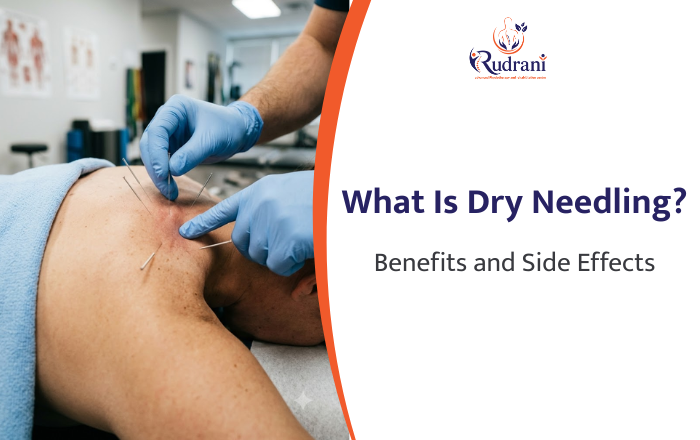
It involves inserting a thin, sterile filament needle directly into a tight band of muscle. Unlike an injection, no medication or fluid goes in the needle itself is the treatment. That’s why it’s called “dry.”
The goal is simple: release the knot, reduce pain, and restore normal muscle function so you can move without that nagging tightness.
How Dry Needling Works
When a muscle stays contracted for too long from poor posture, overuse, or injury a small area within it can become chronically tight. This is a trigger point.
The needle creates a tiny, controlled disruption at that spot. This often triggers a local twitch response, a brief involuntary muscle contraction. Many physiotherapists believe this twitch helps interrupt the pain-tension cycle and improves blood flow to the area, though the exact mechanism is still being studied.
Your physiotherapist will locate the tight band by feel, insert the needle, and adjust its position slightly until the muscle responds.
What Are Trigger Points?
Trigger points are small, hyperirritable spots within a tight band of skeletal muscle. They can cause:
- Local pain at the site
- Referred pain to other areas (a neck trigger point can cause headaches, for example)
- Reduced range of motion
- A feeling of stiffness that doesn’t go away with stretching alone
They’re common in people who sit for long hours, athletes with repetitive strain, and anyone recovering from an injury.
Conditions Treated with Dry Needling
| Condition | How Dry Needling Helps |
|---|---|
| Neck pain and stiffness | Releases tight neck and upper trapezius muscles |
| Lower back pain | Reduces tension in spinal stabilizer muscles |
| Shoulder pain | Addresses trigger points limiting overhead movement |
| Sports injuries | Speeds up muscle recovery and reduces tightness |
| Tension headaches | Targets trigger points in neck and scalp muscles |
| Knee pain | Addresses compensatory tightness in surrounding muscles |
Benefits of Dry Needling
- May reduce muscle tightness and pain
- Can improve range of motion
- Often used alongside exercise therapy for faster results
- May help athletes recover between training sessions
- Can complement other physiotherapy treatments like manual therapy
Results vary depending on your diagnosis, age, severity of the condition, medical history, and how your body responds to treatment. No physiotherapist can guarantee outcomes, and dry needling works best as part of a complete rehabilitation plan rather than a standalone fix.
Is Dry Needling Painful?
Most patients describe it as a brief, dull ache or a twitch sensation rather than sharp pain. The needle itself is very thin — much thinner than needles used for injections or blood draws.
Some areas feel more sensitive than others, and a tight muscle may respond with a quick cramping sensation when the twitch response occurs. This usually passes within seconds.
Side Effects and Risks
Benefits vs Possible Side Effects
| Benefits | Possible Side Effects |
|---|---|
| Reduced muscle tightness | Temporary soreness (like post-workout muscle ache) |
| Improved mobility | Minor bruising at the needle site |
| Pain relief in targeted area | Slight bleeding (rare) |
| Faster recovery when combined with exercise | Fatigue or lightheadedness during session (uncommon) |
Serious complications are rare when the procedure is performed by a trained, licensed physiotherapist using sterile technique.
Who Should Avoid Dry Needling?
| Can Usually Have Dry Needling | Should Avoid or Consult First |
|---|---|
| Adults with muscle tightness or trigger points | Pregnant individuals (certain areas) |
| Athletes with sports-related muscle pain | People with needle phobia |
| Chronic pain patients cleared by a physiotherapist | Those on blood-thinning medication |
| People with restricted movement from tight muscles | Individuals with a compromised immune system |
| People with active infections or skin conditions near the treatment area |
Always disclose your full medical history to your physiotherapist before starting treatment.
Dry Needling vs Acupuncture
Dry Needling vs Acupuncture
| Factor | Dry Needling | Acupuncture |
|---|---|---|
| Basis | Western medicine, neuromuscular | Traditional Chinese Medicine, energy meridians |
| Target | Trigger points and tight muscle bands | Meridian points along the body |
| Goal | Release muscle tension, reduce pain | Balance energy flow (Qi) |
| Practitioner | Physiotherapists, trained in musculoskeletal anatomy | Acupuncturists |
| Needle placement | Based on palpation of tight muscle | Based on meridian charts |
They use similar thin needles, but the philosophy, training, and technique behind each are different.
What Happens During a Session?
- Your physiotherapist assesses your posture, movement, and pain pattern
- They palpate the muscle to locate the trigger point
- The skin is cleaned and a sterile needle is inserted
- The needle is gently manipulated until a twitch response or release is felt
- The needle is removed, and the area may be massaged briefly
- You’re often given movement or stretching guidance afterward
Sessions typically last 15 to 30 minutes and are often combined with other physiotherapy techniques in the same visit.
Aftercare Tips
Before vs After Treatment Care
| Before Treatment | After Treatment |
|---|---|
| Eat a light meal | Apply gentle heat if soreness develops |
| Stay hydrated | Drink plenty of water |
| Wear loose clothing | Avoid intense exercise for 24 hours |
| Discuss medical history | Do gentle stretches as advised |
| Avoid alcohol | Watch for unusual swelling or redness |
Recovery Timeline
Recovery Timeline
| Time After Session | What to Expect |
|---|---|
| 0–2 hours | Mild soreness, similar to a workout |
| 24–48 hours | Soreness typically settles |
| 2–7 days | Gradual improvement in tightness and movement |
| 1–2 weeks | Follow-up session often recommended depending on response |
The number of sessions needed depends on your condition, its severity, and how your body responds. Your physiotherapist will build a plan tailored to your recovery goals rather than a fixed number of visits.
Possible Complications
While uncommon, be aware of:
- Persistent bruising beyond a few days
- Increased pain instead of relief
- Signs of infection at the needle site (redness, warmth, discharge)
- Numbness or tingling that doesn’t resolve
Prevention of Muscle Tightness
- Take movement breaks every 30–45 minutes if you sit for long hours
- Maintain good posture at your desk
- Warm up before physical activity and stretch afterward
- Stay hydrated and manage stress, which can contribute to muscle tension
- Address minor tightness early rather than waiting for it to worsen
Frequently Asked Questions
1. What is dry needling used for?
Dry needling is mainly used to treat muscle tightness, trigger points, and myofascial pain. Physiotherapists commonly use it for neck pain, back pain, shoulder tightness, and sports-related muscle injuries, often alongside exercise therapy for better results.
2. Does dry needling hurt?
Most people feel a brief twitch or dull ache rather than sharp pain. Sensitivity varies depending on the muscle being treated and individual pain tolerance. Any discomfort is usually short-lived.
3. How many dry needling sessions do I need?
This depends on your condition’s severity, your medical history, and how your body responds to treatment. Some people notice improvement within a few sessions, while others need an ongoing plan alongside exercise therapy.
4. Is dry needling the same as acupuncture?
No. Both use thin needles, but dry needling targets muscle trigger points based on Western neuromuscular principles, while acupuncture follows traditional Chinese medicine concepts involving energy meridians.
5. What are the side effects of dry needling?
Common side effects include temporary soreness, minor bruising, and occasional fatigue after the session. These typically resolve within a day or two. Serious complications are rare with a trained practitioner.
Have questions? We’re just a message away! Contact us on WhatsApp — Click Here to Chat with Us
When Should You Consult a Physiotherapist?
If muscle tightness, pain, or restricted movement is affecting your daily activities, work, or sport — and hasn’t improved with rest or stretching — it may be time for a proper assessment. A physiotherapist can determine whether dry needling is appropriate for your specific condition or whether another approach would serve you better.
Meet Our Physiotherapists
Rudrani Advanced Physiotherapy and Rehab Centre, located in Mundhwa, Pune, offers personalized, evidence-based physiotherapy care.
Dr. Prakash Kumar (PT), BPT, MIAP and Dr. Pragya Tambulkar (PT), BPT, MIAP work with patients to assess their condition thoroughly before recommending any treatment, including dry needling, ensuring it fits your specific needs and health history.
If your muscle pain or tightness persists, consider booking a consultation for a personalized assessment.